
The Spotlight
Mellie Chow
Angel Investor
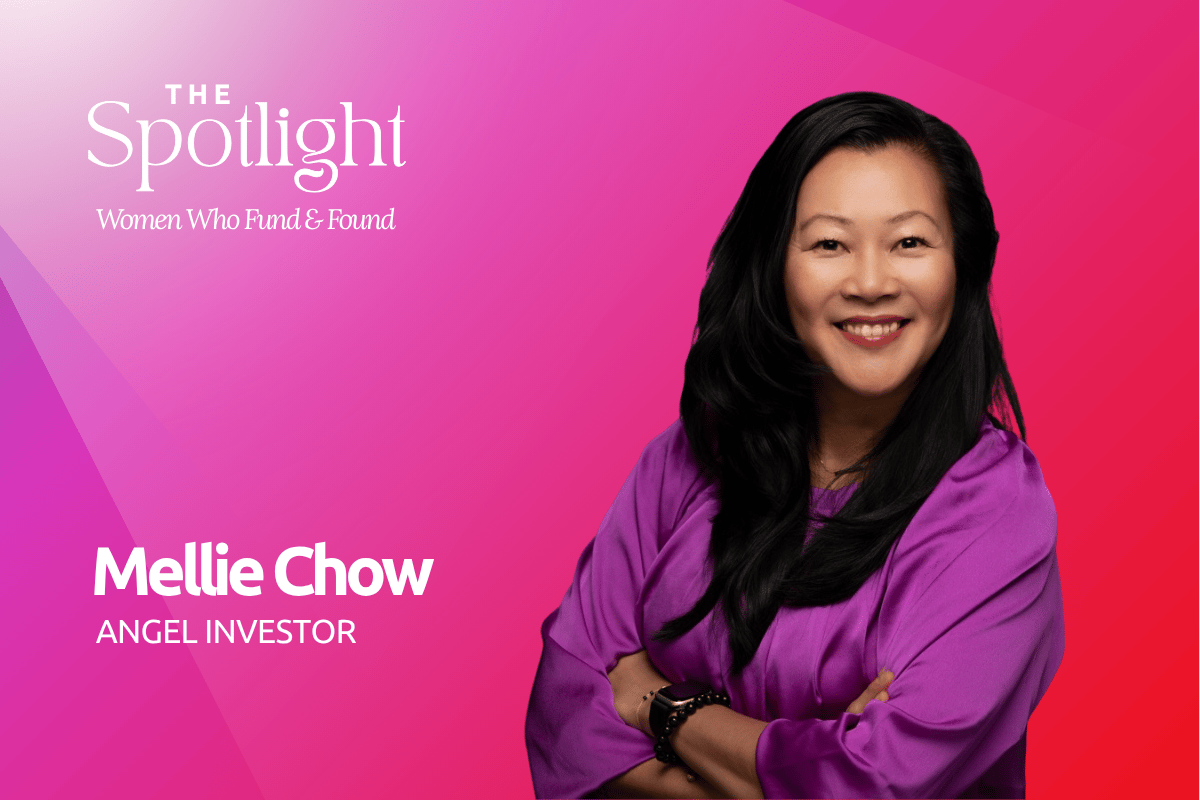
In this new installment of The Spotlight, in partnership with The Scotiabank Women Initiative™, WFW CEO Dr. Sherry Shannon-Vanstone sits down with angel investor and venture capitalist Mellie Chow, to address the persistent funding gap facing women founders and explain why meaningful progress requires women to own the table rather than merely occupy a seat.
Throughout the conversation, Mellie details her philosophy of prioritizing conviction before consensus as she backs category-defining founders transforming women's health, wealth, and work. She breaks down her five essential Pitch to Win strategies for startup pitches, outlines her rigorous due diligence standards across both operator and investor lenses, and introduces a collaborative framework uniting investors, founders, and funders to turn capital allocation into systemic impact.
Read the full discussion below to discover how high-conviction investing is reshaping the venture landscape.
About Mellie Chow
Angel Investor, Venture Capitalist & Ecosystem Builder
Founder & General Partner, Unapologetic Ventures | Co-Founder & Managing Partner, FemTech USA Accelerator
Mellie Chow is the Founder & General Partner of Unapologetic Ventures, an early-stage venture capital fund backing category-defining founders building the future of Health, Wealth & Work. She is also Co-Founder & Managing Partner of FemTech USA, a Women's Health innovation accelerator and platform launched in partnership with Pennovation Works at the University of Pennsylvania.
An engineer turned entrepreneur, corporate executive, professor, angel investor, LP and venture capitalist, Mellie brings over 25 years of experience spanning technology, business strategy, innovation, entrepreneurship and venture capital. Her unconventional career includes leadership roles at Accenture and Comcast, founding The Revolving Kitchen, and investing in emerging technologies and startups across North America.
Mellie previously served as a Venture Partner with Archangel Network’s Axion Fund and Board Advisor to Techstars Toronto, and was an LP and Investment Committee member with Alumni Ventures. She remains an active angel investor and LP in Techstars and Hustle Fund. She is also an Adjunct Professor at NYU, teaching Emerging Technologies, and at Elizabethtown College, teaching Competitive Product Strategy.
Her investment experience focuses heavily on women-led companies, with a strong concentration in Women's Health and FemTech. Her investment, advisory, and mentorship experience spans early-stage startups across healthcare, emerging technologies, and innovation. She also serves as an advisor to FemTech Canada's wHealth Ignite program and mentors founders through Springboard Enterprises, Techstars, leading universities, and startup accelerators.
Through FemTech USA, Mellie is building a connected ecosystem that brings together founders, clinicians, researchers, health systems, industry partners and investors to accelerate Women's Health innovation from discovery to commercialization. Anchored in Philadelphia with a cross-border vision, the initiative aims to create stronger pathways for breakthrough innovations to access capital, clinical validation, strategic partnerships and the U.S. healthcare market.
Her investment philosophy is rooted in conviction before consensus. Having spent her career navigating the intersections of academia and industry, corporations and startups, founders and funders, and Canada and the United States, Mellie has developed a unique vantage point for identifying overlooked markets and emerging categories before they become obvious.
That perspective inspired Unapologetic Ventures.
Raised with the Canadian instinct to apologize and the humility expected of a first-born Chinese daughter, Mellie eventually embraced a different mindset: stop waiting for permission, challenge conventional thinking and have the conviction to build what should exist.
Today, she channels that philosophy into backing ambitious founders and building the communities that help them succeed.
Through capital, community and conviction, Mellie is committed to making the unseen seen, closing equity gaps and empowering founders to build a better future.
Because the future doesn't belong to those who wait for permission. It belongs to those bold enough to build it.
Connect on LinkedIn: Mellie Chow
Investor Snapshot
Investment Focus: Pre-seed and seed investments in category-defining founders building the future of Health, Wealth & Work, with deep conviction in Women's Health.
Investment Philosophy: Conviction before consensus. Backing overlooked founders and emerging markets before their category-defining potential becomes obvious.
Unique Edge: Proprietary deal flow via FemTech USA & Canada, Techstars, Hustle Fund Angel Squad, top universities (UPenn, CMU, NYU, Waterloo, Kellogg), and cross-border ecosystems, identifying category makers before consensus.
Committed To: Closing equity gaps in Health, Wealth & Work by empowering overlooked founders through capital, community and conviction.
The Spotlight: A Conversation with Mellie Chow
Interviewed by Dr. Sherry Shannon-Vanstone, Co-founder & CEO, Women Funding Women Inc. (WFW).
Women Funding Women launched The Spotlight in 2025 in partnership with the Scotiabank Women Initiative to share the journeys of founders and funders. In this edition, Sherry Shannon-Vanstone speaks with Mellie Chow, an angel investor, venture capitalist, and founder of Unapologetic Ventures.
Why Mellie Started Unapologetic Ventures
Dr. Sherry Shannon-Vanstone: Mellie, welcome. What prompted you to start Unapologetic Ventures?
Mellie Chow: It was born out of necessity. I kept seeing the same funding gap. On one side were founders I believed in who couldn't get the capital they needed. On the other were allocators looking for the same familiar patterns. I stopped waiting for permission and decided to create the change I wanted to see.
I had more than 10 founders I had high conviction in and wanted to write checks for. An angel check is never enough. If I was going to run 10 Special Purpose Vehicles (SPVs), that right there was a fund on its own. As an Limited Partner (LP) myself, I also knew people who wanted exposure to early-stage venture capital on both sides of the border, focused on women's health, wealth, and work. They didn't have many ways in. I built the fund I wanted to see.
Sherry: What drew you to angel investing in the first place?
Mellie: I was drawn to the impact. The people allocating capital are deciding which innovations get to exist. It's a vote for the future we want to see. As an angel investor and an LP in other people's funds, I had a front-row seat. On investment committees, I watched deals I had high conviction in get left on the table. I saw inequity in the system and inefficiencies in underwriting. I had the skill set, the acumen, and the track record to do something about it. At this point, it feels like an obligation.
Conviction before consensus
Sherry: What's your core investment thesis?
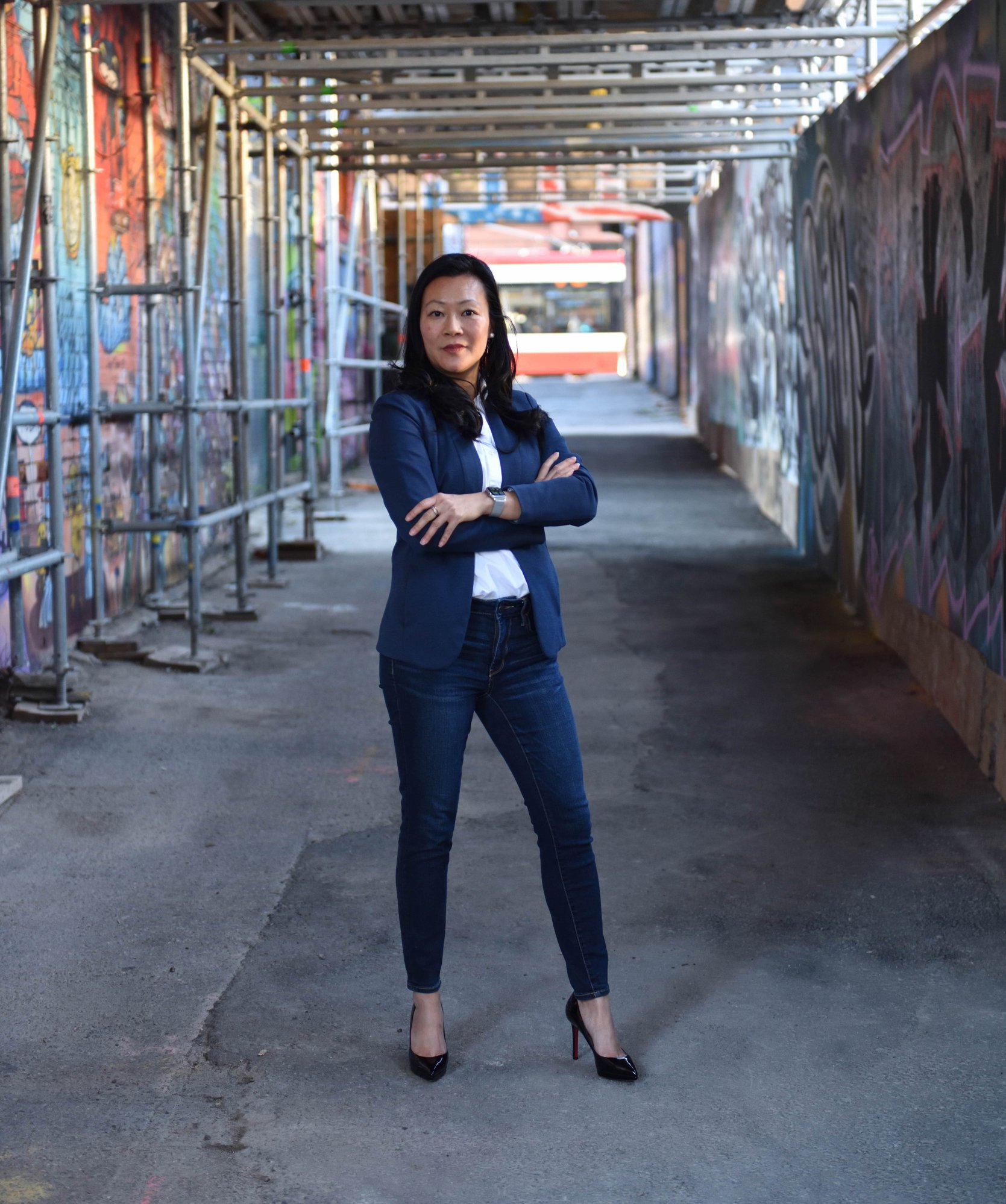
Mellie: It's conviction before consensus. We back category-defining founders building the future of women's health, wealth, and work. We look for financial returns and meaningful impact. It's an AND. We invest primarily from pre-seed to seed in the U.S. and Canada, with initial checks of $50,000 to $150,000.
In health, I think of women as the healthcare system's highest-expectation customers (HXC). When you build a better solution for them, you build a better product for everyone. In wealth, I'm looking for founders using fintech, insurtech, digital assets, and technologies like blockchain to expand access to financial inclusion opportunity. In work, it's about what AI-native software, agentic AI, and robotics can do for human potential and productivity. These areas are interconnected. If we can drive change in health, wealth, and work, we can drive change systemically.
I'm fundamentally a founder-first investor. I look for founders who see what others don't and are solving a problem they simply cannot ignore. They approach their startup as a biological necessity, not just a business plan. I've seen how often women founders' lived experience gives them an insight into a massive market that venture capital has underestimated. Women's health is a perfect example. I see a market inefficiency in how it's underwritten, with enormous potential for returns and impact.
Pitch to Win
Sherry: What advice do you give founders before they pitch?
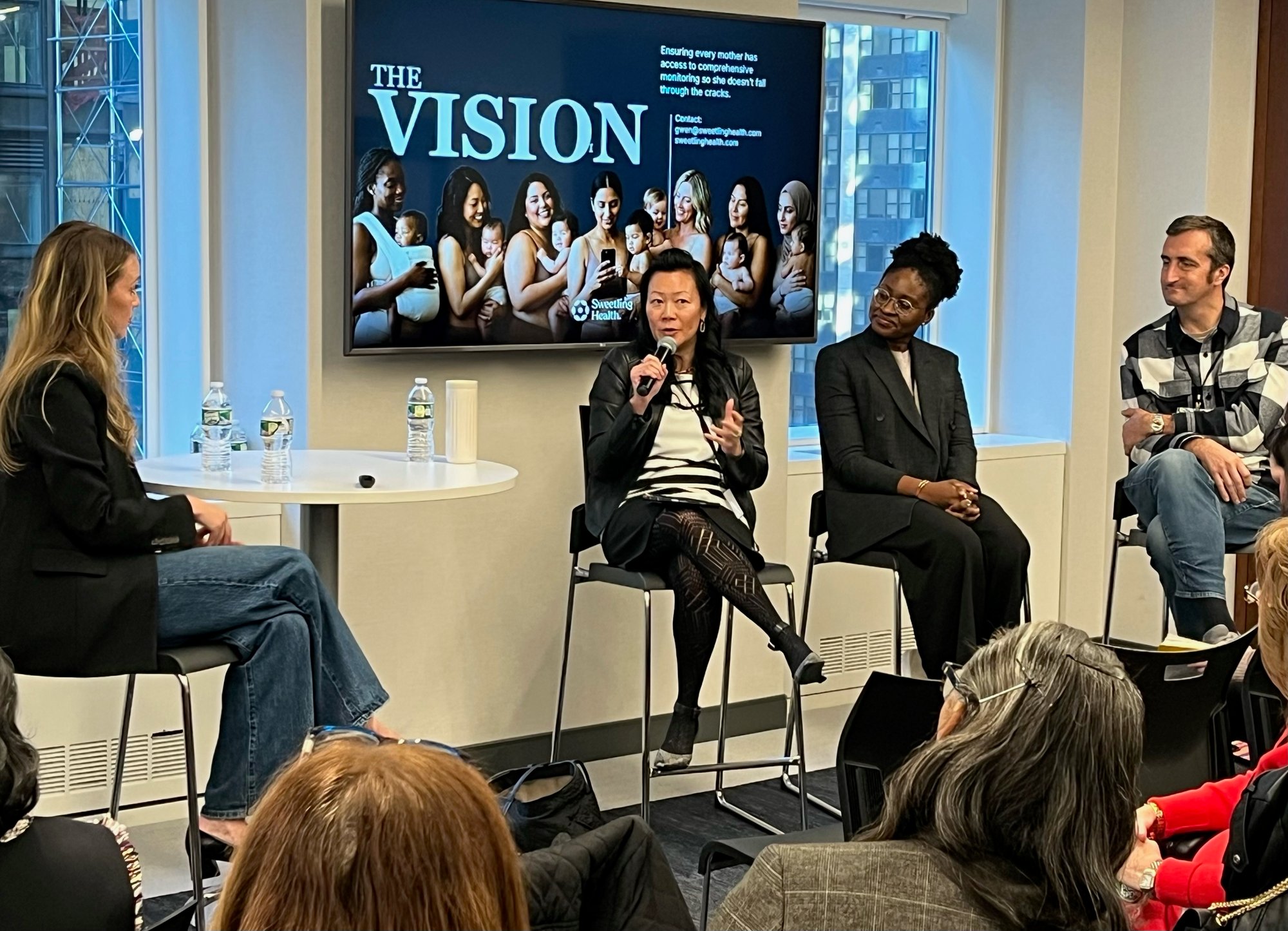
Mellie: I have five lessons I call Pitch to Win.
1. Ask for advice. When you ask for advice, you get money. When you ask for money, you get advice. Build authentic investor relationships long before you need the capital.
2. Ask for the debrief. First, make sure it's a qualified no. Do they invest in your category, geography, and stage? Are they actively deploying capital? Do they already have a horse in the race? If it's a fit and you still get a no, ask where you missed the mark. Sometimes a no means “not right now.” Keep following up. Emails get buried. Being in the same rooms and seeing how someone operates over time can build conviction.
3. Pitch for potential. Most women show me today's roadmap. Show me five or ten years out. What's the market you're creating? Why are you uniquely positioned to win? Bring me into your big dream.
4. Find your people. Look for investors who share your conviction, thesis, and beliefs. One of the Female Founders I know kept pitching until she got her first yes. She received 217 no’s before that first yes. Then the dominoes started to fall. All it takes is one investor to change your entire trajectory.
5. Know when to pivot. Stay relentlessly committed to your vision and mission, and stay flexible in your approach. Eight surveys are an N of eight. It’s a data point. Not a business or a startup. Keep testing and listening. Customers may not know what to ask for until you show them. You've got to stay super scrappy about finding that latent demand.
Sherry: What about founders who do consulting to understand their customers and bring in early revenue?
Mellie: I see that as paid market research. I'd lean into it. You want to get closer to the market and understand demand any way you can. How you frame it matters. If it sounds like it's taking you away from building the business, that's a red flag. If it's paid market research, I'm all for it.
What earns an investment
Sherry: Say I'm a founder and we're ready to negotiate. What are your non-negotiables?
Mellie: I evaluate companies through an operator's lens and an investor's lens. As an operator, I want to know whether the technology works, whether customers will pay, what it takes to commercialize and scale, and what could break. As an investor, I want to understand the market, competitive advantage, valuation, and potential for venture-scale returns.
I teach emerging technologies at NYU, where I ask six questions about what I call Promethean technology. Is it dramatically better? Does it change the paradigm? Can it scale? Does it democratize access? Can it enable other innovation? Could it permanently change how we live or work?
My non-negotiables are founder integrity and coachability, genuine market demand, meaningful differentiation, a credible path to scale, and disciplined economics and execution. An underserved market still needs to support a scalable business. I look at four layers of due diligence: founder, business, technology, and legal. I invest with conviction, but I diligence with discipline. Belief gets a founder my attention. Evidence earns my investment.
Capital, community and conviction
Sherry: Now you're a founder yourself. What's your vision for Unapologetic Ventures?
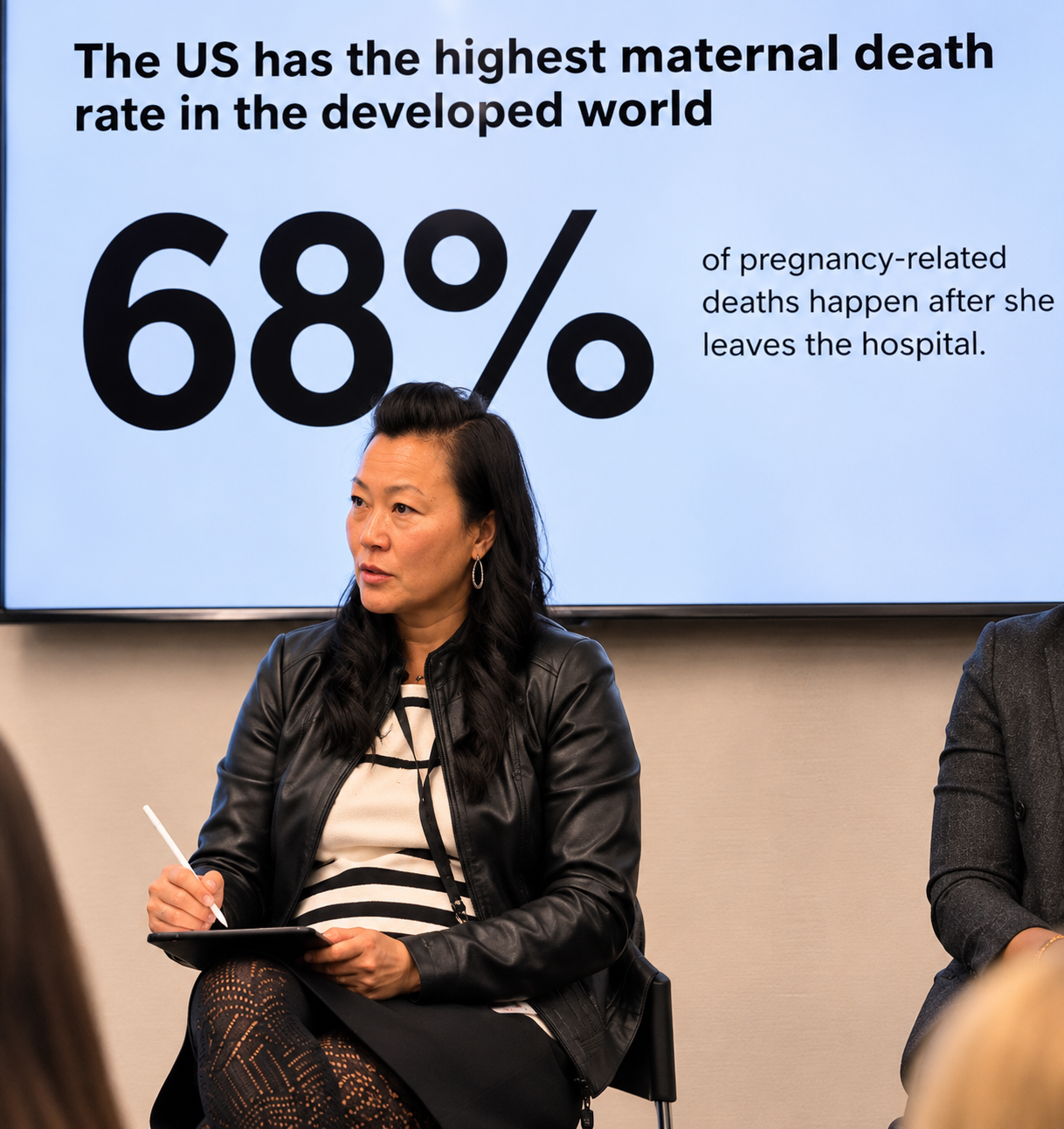
Mellie: I'm building a flywheel. Capital helps founders survive. Community helps them thrive. Conviction helps them endure long enough to win their category.
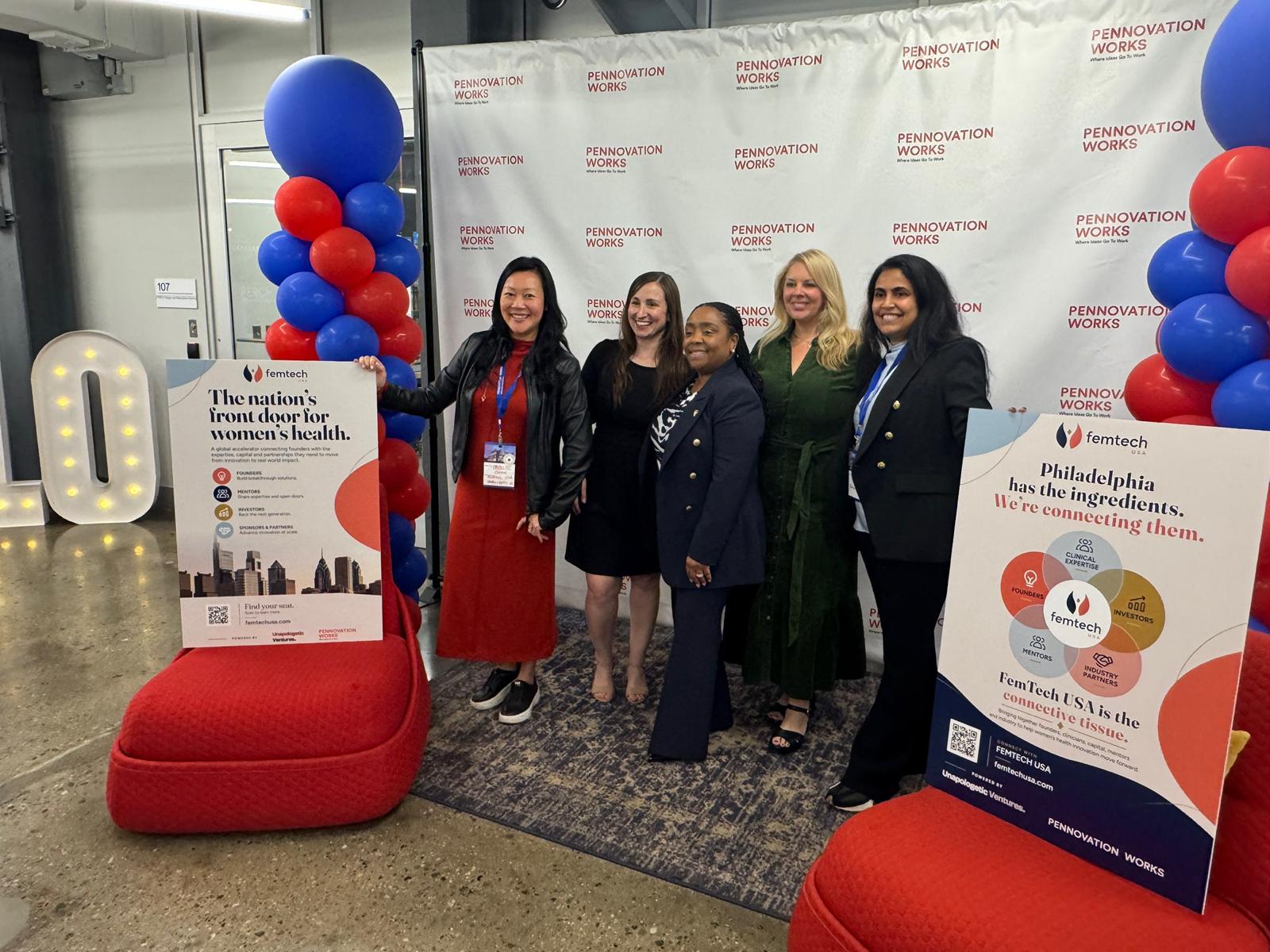
Femtech USA, powered by Unapologetic and the University of Pennsylvania's Pennovation Works, is one part of that. Femtech founders spend a lot of time and burn a lot of cash just trying to find the front door to health institutions. We're trying to give them a way in.
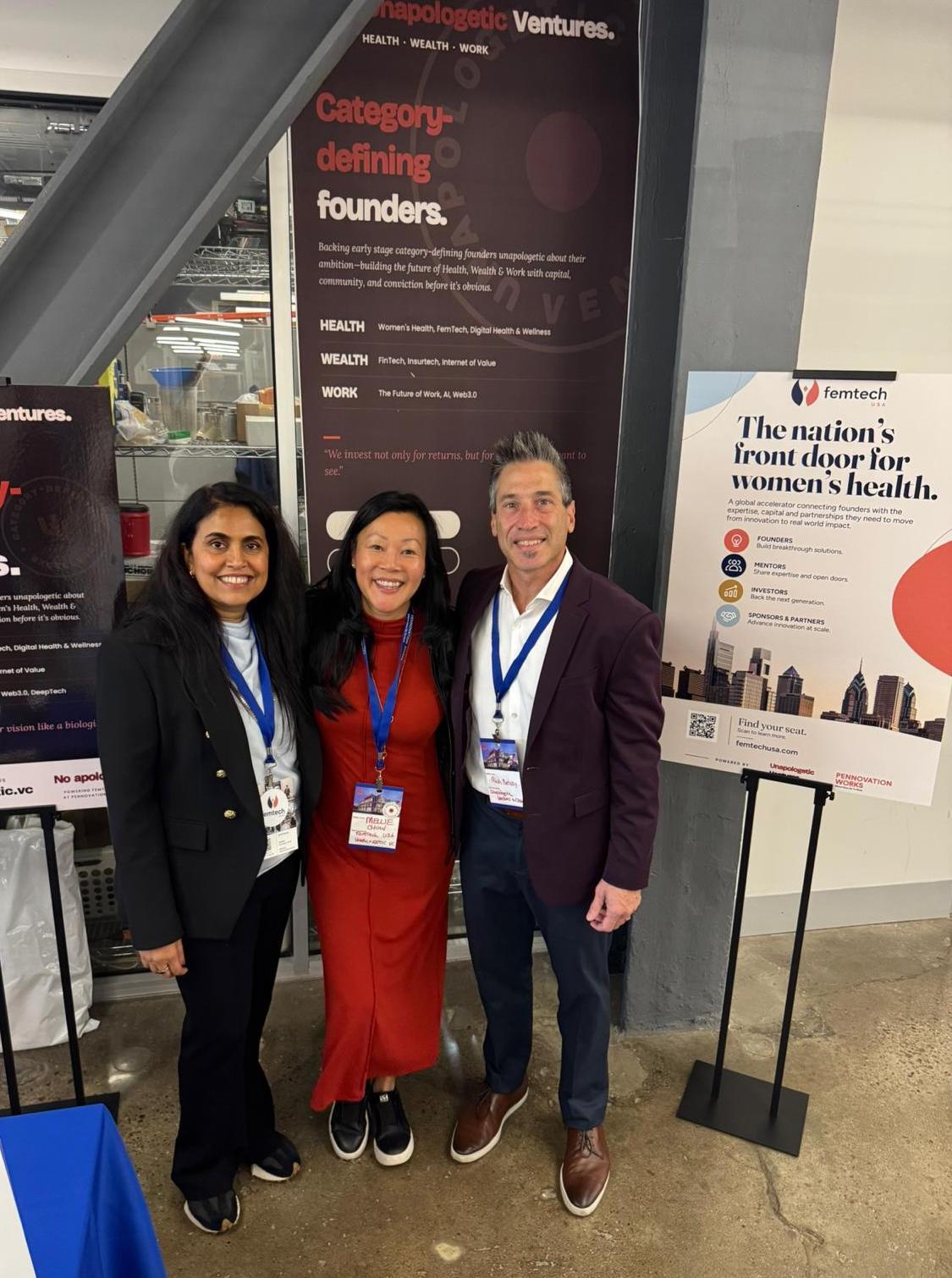
On day one, I give founders a conviction coach, Rich Belsky. Conviction is a muscle. All you have to do is the reps. Then life happens. When your company has a near-death experience, we want to be your first call because of the trust we've built. As operators, we've been there. Let's figure it out together. We take founder mental wellness seriously because a founder breakup or a loss of conviction can undo everything.
From representation to ownership
Sherry: How can we mobilize more women to become angel investors and venture capitalists? What role can Women Funding Women play?
Mellie: Getting more women to the table is only the beginning. We need more women owning the table. If we want to change who gets funded, we also have to change who controls the capital. In a 2019 report, CIBC Capital Markets projected that Canadian women would control nearly $3.8 trillion in financial assets by 2028, in 2018 dollars. For too long, women have been underrepresented as both founders and allocators.
I think it starts with education, access, and community. First, demystify the asset class. Make the mechanics, risks, and opportunities transparent. Second, create accessible on-ramps through angel networks, syndicates, SPVs, or becoming an LP in a venture fund. Your first bet may not be the winner. You hone your gut feel and your due diligence over time. Every woman brings a superpower to the table. Capital is one part of the value we bring.
Finally, build community and conviction. We need trusted networks like Women Funding Women, where we can share our due diligence practices, deal flow, and experiences as investors. Sometimes we're even afraid to share our successes. These communities help women move from curiosity to confidence and then to action.
I talk about moving from representation to ownership, from financial literacy to capital allocation, and from individual action to collective influence. That's my IFF framework: Investors, Founders, and Funders. When all three work together, more women allocate capital, more women founders get funded, and more women share in the wealth created through innovation. Capital is a vote for the future, and it's time more women exercised that vote unapologetically.
Sherry: Thank you, Mellie, for sharing your journey with our readers.
Key Learnings from Mellie Chow
For the movement
"Getting more women to the table is only the beginning. We need more women owning the table. If we want to change who gets funded, we also have to change who controls the capital."
Establishing your community
"Capital helps founders survive. Community helps them thrive.
Conviction helps them endure long enough to win their category."
Ready to Empower More Women-Led Ventures?
The Spotlight | Women Who Fund & Found initiative aims to inspire, educate, and connect our Collective by showcasing remarkable Canadian women founders and the pioneering women investors who champion them.
Join the WFW Collective! At Women Funding Women, our mission is to accelerate the flow of angel capital to Canadian women entrepreneurs, one purposeful investment at a time.
How to stay informed & engaged